- RTX Spark's $1,799-$2,900 pricing targets Intel's most profitable premium PC segment, not the mainstream market
- 128GB unified memory and NVLink eliminate PCIe bottlenecks, making local 70B+ model inference economically viable vs. cloud GPUs
- Success hinges on whether agentic AI software ecosystem materializes in 18 months, otherwise RTX Spark remains a niche developer tool
The Price Tag Is the Strategy
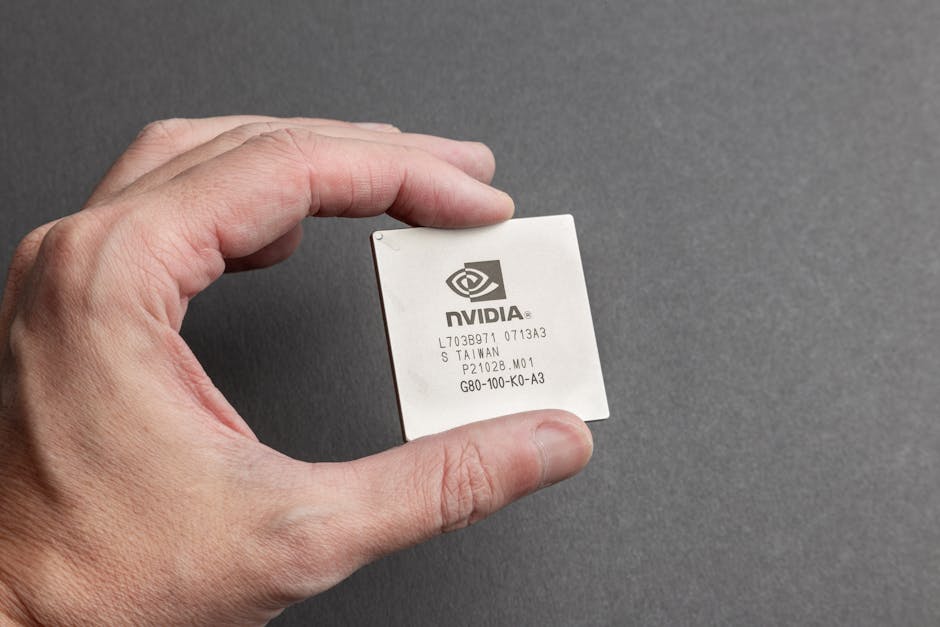
Nvidia just announced RTX Spark at Computex 2026: a superchip combining a 20-core Arm CPU, Blackwell GPU with 6,144 CUDA cores, and up to 128GB unified memory. The pitch is “agentic AI PCs” that can run 120B-parameter models locally with million-token context windows. The reality? Entry-level N1 models start at $1,799, and the N1x variant forces a minimum price of $2,900.
That floor matters more than the specs. Nvidia isn’t chasing the mainstream PC market — it’s surgically extracting Intel’s most profitable customers. Premium laptops for creators, developers, and ML engineers are where Intel has defended its margins for years. Nvidia is now offering those buyers something Intel fundamentally cannot: a GPU architecture that already dominates AI workloads, unified memory that eliminates PCIe bottlenecks, and an ecosystem (CUDA, TensorRT, cuDNN) that every ML framework is built on.
Intel’s response at the same event — Xeon-based “rackscale AI infrastructure” — reveals the problem. They’re pivoting to data centers while Nvidia attacks the client side. AMD is silent. The x86 incumbents have no credible answer to a vertically integrated Arm+GPU superchip purpose-built for on-device AI.
The Unified Memory Gambit
128GB of LPDDR5X shared between CPU and GPU changes the economics of local inference. Today, if you want to run a 70B model with meaningful context, you’re either renting cloud GPUs at $2-4/hour or building a desktop with discrete cards and fragmented memory pools. RTX Spark puts that capability in a laptop — not because the raw compute is better than a 4090, but because unified memory eliminates the PCIe tax.
Apple proved this model works with M-series chips. The difference is Apple optimized for consumer AI (photo editing, voice transcription, summarization). Nvidia is targeting developer AI: fine-tuning LoRA adapters, running local RAG pipelines, debugging agent workflows without network latency. The 300 GB/s memory bandwidth and NVLink interconnect mean you can load a quantized Llama 3.1 405B model and actually iterate on it.
That’s the wedge. If you’re a developer who currently uses Runpod or Lambda Labs for experiments, a $3,000 RTX Spark laptop pays for itself in 3-4 months of cloud GPU time. If you’re an enterprise buyer provisioning machines for an AI team, you’re comparing $2,900 upfront vs. ongoing OpEx for cloud inference. The break-even math is straightforward.
What “Agentic AI OS” Actually Means
Nvidia’s marketing claims RTX Spark will “turn Windows into an agentic AI OS.” Strip away the hype: they’re betting that local, always-on AI agents become table stakes for productivity software within 18 months. Microsoft is clearly on board — Surface Ultra is one of the launch partners, and the announcement aligns with their push for Copilot+ experiences that don’t round-trip to Azure.
The technical bet is that you need persistent models — agents that stay loaded in memory, maintain context across sessions, and respond in milliseconds, not seconds. That’s impossible with cloud inference (latency + cost) and impractical with today’s iGPUs (not enough memory or compute). RTX Spark is sized precisely for this use case: large enough to run frontier open-weight models, efficient enough to stay powered on in the background.
But here’s the risk: almost none of that software exists yet. Nvidia is shipping hardware for an ecosystem that’s mostly vaporware. The actual launch SKUs this fall will run… what, exactly? Local ChatGPT wrappers? Copilot integrations that could run fine on current hardware? The “agentic OS” vision requires a Cambrian explosion of new applications, and developers won’t build those apps until the install base exists. It’s a classic chicken-and-egg problem.
Intel’s Margin Nightmare
From Intel’s perspective, this is catastrophic. RTX Spark systems target buyers willing to pay $2,000-$3,500 for premium laptops — the exact segment where Intel has maintained 60%+ gross margins. Losing volume in low-end PCs is painful; losing the high end is existential.
Intel can’t match this with x86. Their roadmap is stuck in the old paradigm: discrete CPU + discrete GPU + system memory + VRAM. Even if they taped out an Arm chip tomorrow, they don’t have Nvidia’s GPU IP, CUDA ecosystem, or ML frameworks. AMD has better GPU tech than Intel, but they’re not vertically integrating it into an Arm superchip — they’re still selling discrete parts.
The one wildcard is software lock-in. If enterprises have legacy x86 dependencies or IT policies that block Arm, RTX Spark is DOA in those accounts. But that’s a shrinking moat. The developer and creator markets have already accepted Apple Silicon. Windows-on-Arm app compatibility has quietly gotten good. Nvidia picked the right moment.
The Two Plausible Outcomes
Scenario A: RTX Spark succeeds, and by 2028, “AI PC” means “Nvidia inside.” Intel retreats to servers and legacy enterprise. AMD stays in discrete GPUs but cedes the integrated market. Qualcomm’s Snapdragon X becomes the budget Arm option, while Nvidia owns premium. Microsoft and the OEM ecosystem fully commit to Arm, and x86 becomes a legacy architecture.
Scenario B: RTX Spark launches to tepid reception because the software isn’t ready, the price is too high, and enterprises don’t see ROI on local AI agents. Nvidia sells a few hundred thousand units to developers and early adopters, but it doesn’t cross the chasm. Intel survives by default. The “AI PC” hype cycle deflates, and we’re back to incremental improvements in CPUs and discrete GPUs.
I’d bet 70/30 on Scenario A. Not because the hardware is revolutionary — it’s just good integration of existing tech. But because the market is ready. Developers are tired of cloud GPU bills. Enterprises want to keep sensitive data local. The economics of on-device inference finally make sense at this price point. And Nvidia has the ecosystem momentum that Intel and AMD don’t.
The $2,900 floor isn’t a bug. It’s a signal that Nvidia is serious about capturing the highest-value segment first, then scaling down as costs drop. Apple did the same thing with M1. The question isn’t whether Nvidia can disrupt the PC market — it’s whether Intel has 18 months to mount a credible response. Based on what I’ve seen from Computex, they don’t.
FAQ
Q: Can RTX Spark actually run 120B models locally, or is that marketing hype?
A: It depends on quantization. A 120B model at FP16 is ~240GB, which won’t fit. But at 4-bit quantization (FP4), it’s ~60GB, leaving room for context and OS overhead in the 128GB memory pool. Nvidia explicitly mentioned FP4 support in the announcement, so yes, it’s technically feasible — but inference speed will depend on batch size and context length. You’re not getting cloud-tier throughput, but for single-user interactive use cases, it should work.
Q: Why would I buy this instead of a MacBook Pro with M4 Max?
A: CUDA. If your workflow involves PyTorch, TensorFlow, JAX, or any ML framework, Nvidia’s ecosystem is orders of magnitude more mature than Apple’s MLX. Metal Performance Shaders are improving, but they’re not a substitute for CUDA/cuDNN in production workflows. Also, 128GB unified memory vs. M4 Max’s 96GB ceiling. The Mac is better for creative work; RTX Spark is better for ML development.
Q: What happens to Nvidia’s discrete GPU business if RTX Spark takes off?
A: Nvidia isn’t cannibalizing itself — they’re expanding TAM. Desktop gamers and data center customers will still buy discrete cards. RTX Spark targets a different buyer: someone who currently uses a MacBook + remote GPU, or a thin-and-light laptop + cloud inference. It’s additive, not substitutive. The real risk is to Intel’s CPU revenue, not Nvidia’s existing GPU sales.
Did you find this helpful?
Your support keeps this blog running and ad-free content coming.
☕ Buy me a coffeeMost Popular Posts
- Custom Metaclass in Python: 43% Faster Validation (12,932 views)
- yfinance Alternatives 2026: 7 Free APIs Compared (987 views)
- Python match-case: 7 Patterns That Beat if-elif Chains (975 views)
- YOLOv8 INT8 Quantization: 4x Faster on Jetson Orin (866 views)
- PaddleOCR vs EasyOCR vs Tesseract: Why PaddleOCR Is Slower (682 views)