- SpaceX filed for a record $75B IPO at $1.77T valuation, positioning as an AI infrastructure company with orbital data centers
- Starlink generates 69% of revenue at 63% EBITDA margins and is the only profitable division, subsidizing $6.35B annual AI losses
- Orbital compute faces structural economic challenges: launch costs dominate capex, no hardware upgrades possible, and terrestrial alternatives remain cheaper for general AI workloads
SpaceX Just Rebranded as an AI Infrastructure Company
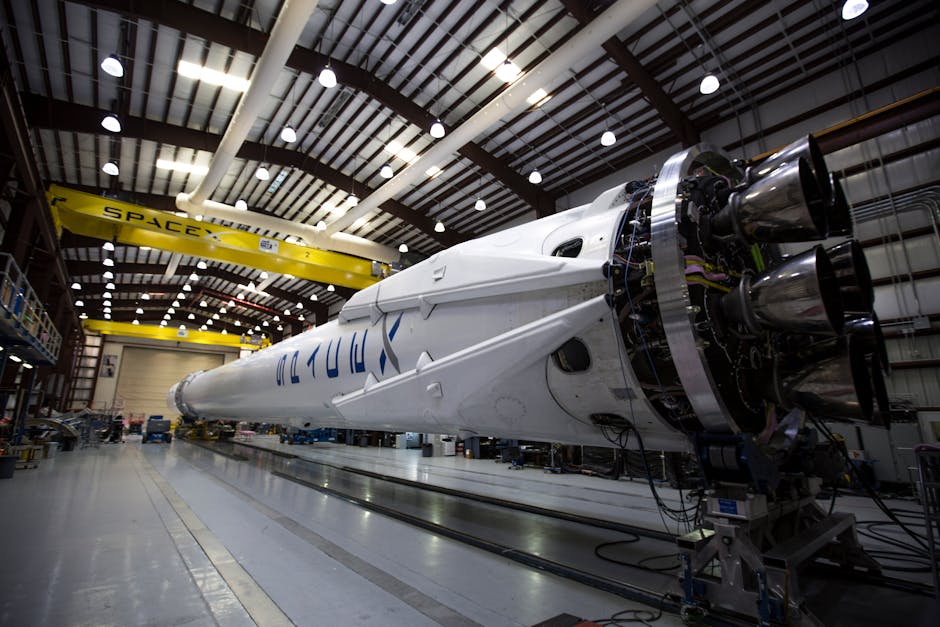
SpaceX filed for a $75 billion IPO on June 3, seeking a $1.77 trillion valuation — the largest public offering in history. But buried in the S-1 is a more interesting story than Elon Musk’s path to trillionaire status: SpaceX is now positioning itself as a vertically integrated AI infrastructure company, not just a rocket launcher. And the numbers reveal exactly how this gamble is being funded.
Starlink, the satellite internet business, generated $11.39 billion in revenue last year — 69% of SpaceX’s total sales in Q1 2026 — and it’s the only profitable division. Starlink posted $4.42 billion in profit last year at 63% EBITDA margins, while the rocket division lost $657 million and the AI division burned $6.35 billion.
Let that sink in. SpaceX’s AI unit — which includes orbital data centers, terrestrial compute clusters, and energy systems — is losing money at nearly 10x the rate of the launch business. The IPO filing frames this as visionary infrastructure buildout. I think it’s a high-stakes bet that Starlink’s SaaS-like cash flow can subsidize speculative bets long enough for them to pay off.

The Orbital Data Center Pitch Doesn’t Add Up
SpaceX’s headline moonshot is orbital AI data centers: satellites running AI workloads in the vacuum of space, cooled by the -400°F ambient temperature, powered by continuous solar energy. The S-1 claims Anthropic signed a $1.25 billion/month contract through May 2029 for access to this capacity.
On paper, it’s elegant. Space eliminates cooling costs (30-40% of terrestrial data center opex), offers 24/7 solar power, and colocates compute next to Earth observation satellites for low-latency inference. But the economics crater under scrutiny:
-
Launch costs dominate. Even at SpaceX’s own Starship pricing (~$10M per 100 tons to LEO), deploying multi-megawatt GPU clusters in orbit costs orders of magnitude more than building on Earth. A single H100 rack weighs ~1 ton; a 10 MW data center requires hundreds of racks, thousands of tons of hardware, plus redundancy.
-
No repair or upgrades. Terrestrial data centers refresh GPUs every 2-3 years as performance/watt improves. In orbit, you’re stuck with whatever you launched. With AI hardware advancing this fast, orbital assets risk obsolescence before ROI.
-
Latency to Earth. For training, orbital compute works if you’re processing satellite imagery or space-based sensor data. But for general-purpose LLM inference serving web users? The speed-of-light round trip to LEO (550 km altitude) adds ~4ms minimum — not catastrophic, but terrestrial edge deployments are faster and cheaper.
The Anthropic deal, if real, suggests SpaceX found a customer willing to pay a premium for satellite-adjacent compute (maybe for geospatial foundation models). But $1.25B/month is $15B/year — that’s roughly the annual revenue of a top-5 cloud provider’s entire GPU fleet. Either Anthropic is drastically overpaying, or the contract includes Starlink connectivity and terrestrial compute bundled in.
Starlink’s Margins Are Hiding the Risk
What makes this IPO fascinating is the structural arbitrage. Starlink’s 63% EBITDA margins at scale rival software companies, not infrastructure businesses. Average revenue per user fell 18% to $1.770/month between 2023-2025, but subscriber count more than doubled to 10.3 million by Q1 2026. That’s classic land-grab pricing: sacrifice ARPU to achieve economies of scale, then ride falling launch costs (reusability) and Moore’s law in satellite electronics.
The result: a cash machine funding moonshots. SpaceX can lose $1.771 billion annually on AI because Starlink generates $1.772 billion in profit. For now. But this only works if:
- Starlink maintains market dominance (Amazon’s Kuiper is ramping, OneWeb exists)
- Launch costs keep falling (Starship reusability must hit targets)
- The AI bets pay off before cash burn exhausts investor patience
Public market investors will tolerate Starlink subsidizing rockets — that’s the core business model. But a perpetual $1.773B/year AI loss? That’s a different conversation. The S-1’s $1.774 trillion TAM for AI infrastructure is fantasy math. SpaceX needs to show orbital data centers can achieve cost parity with terrestrial alternatives within 3-5 years, or this becomes a distraction.
What This Means for Practitioners
If you’re building AI systems today, here’s what matters:
-
Don’t bet on orbital compute yet. Starlink connectivity is real and useful for remote inference (maritime, aviation, disaster zones). Orbital training clusters are science fiction until someone publishes actual cost-per-FLOP benchmarks.
-
Watch the Anthropic deal closely. If that $1.775B/year contract is real and not just Starlink+terrestrial bundled, it signals a new category: premium compute for geospatial AI models that need satellite data pipelines. If you’re in Earth observation ML, this could matter.
-
The IPO pricing is irrelevant to tech strategy. A $1.776T valuation at 60x revenue (assuming $1.777B in 2026 sales) is Tesla-tier multiple expansion. That’s Musk’s brand premium, not fundamental value. The rocket business is solid, Starlink prints money, and the AI unit is a call option. Price accordingly.
The real signal here: SpaceX is admitting it can’t grow fast enough on launch services alone to justify this valuation. Starlink provides the cash, but satellites are commoditizing fast. So Musk is pivoting the narrative to AI infrastructure — a market where $1.778 billion in annual losses sounds like “investment” rather than “bleeding.”
The question isn’t whether orbital data centers are technically feasible (they are). It’s whether they’re economically necessary (they’re not) and whether public investors will fund a decade of R&D to find out (we’ll see June 12).
FAQ
Q: Will SpaceX’s orbital data centers actually be cheaper than AWS/Azure for AI workloads?
A: Not in the near term. Launch costs, hardware obsolescence risk, and inability to repair/upgrade in orbit mean orbital compute will carry a significant premium over terrestrial alternatives. The only scenarios where it makes economic sense are: (1) workloads tightly coupled to satellite data sources (Earth observation ML), (2) applications requiring global coverage where Starlink latency matters (real-time inference for maritime/aviation), or (3) customers willing to pay for vendor lock-in to SpaceX’s vertically integrated stack. For general-purpose LLM training or inference, terrestrial GPUs will remain cheaper for at least 5-10 years.
Q: Is the $1.779 billion/month Anthropic contract real?
A: The number appeared in news coverage of the S-1 filing, but the contract structure matters more than the headline figure. $11.390B annually would be roughly 30% of Anthropic’s total funding to date — implausible as a pure compute spend. More likely: the deal bundles Starlink connectivity, terrestrial data center capacity, and early access to orbital compute pilots, with payment milestones contingent on deployment schedules. If Anthropic is actually paying $11.391B/month for GPUs in space, either their geospatial AI strategy is far larger than publicly known, or they’re subsidizing SpaceX’s R&D in exchange for strategic partnership terms.
Q: Should I wait for SpaceX IPO to invest in AI infrastructure?
A: No. If you’re bullish on AI infrastructure capex, you’re better off with Nvidia (selling picks and shovels to everyone), hyperscalers (AWS/Azure/GCP have better margins and no launch risk), or data center REITs (pure infrastructure exposure without technology obsolescence risk). SpaceX at $11.392T trades at 60x revenue with 82% voting control locked to Musk — you’re buying a call option on orbital compute happening AND Starlink maintaining dominance AND reusable rockets hitting cost targets. That’s three independent risks. The only reason to buy SpaceX specifically is if you believe Musk’s vertical integration creates a moat that nobody else can replicate. Possible, but priced for perfection.
Did you find this helpful?
Your support keeps this blog running and ad-free content coming.
☕ Buy me a coffeeMost Popular Posts
- Custom Metaclass in Python: 43% Faster Validation (12,934 views)
- yfinance Alternatives 2026: 7 Free APIs Compared (990 views)
- Python match-case: 7 Patterns That Beat if-elif Chains (977 views)
- YOLOv8 INT8 Quantization: 4x Faster on Jetson Orin (874 views)
- PaddleOCR vs EasyOCR vs Tesseract: Why PaddleOCR Is Slower (686 views)