- US inflation hit 4.2% in May 2026, driven by 40.5% gasoline price surge from the Iran war and Strait of Hormuz closure.
- The Fed faces an impossible position: war-driven supply shocks cannot be fixed with demand-side monetary policy tools.
- Core inflation came in softer than expected at 0.2% monthly, but the risk of energy costs passing through to all categories remains significant.
The Energy Tax Nobody Voted For
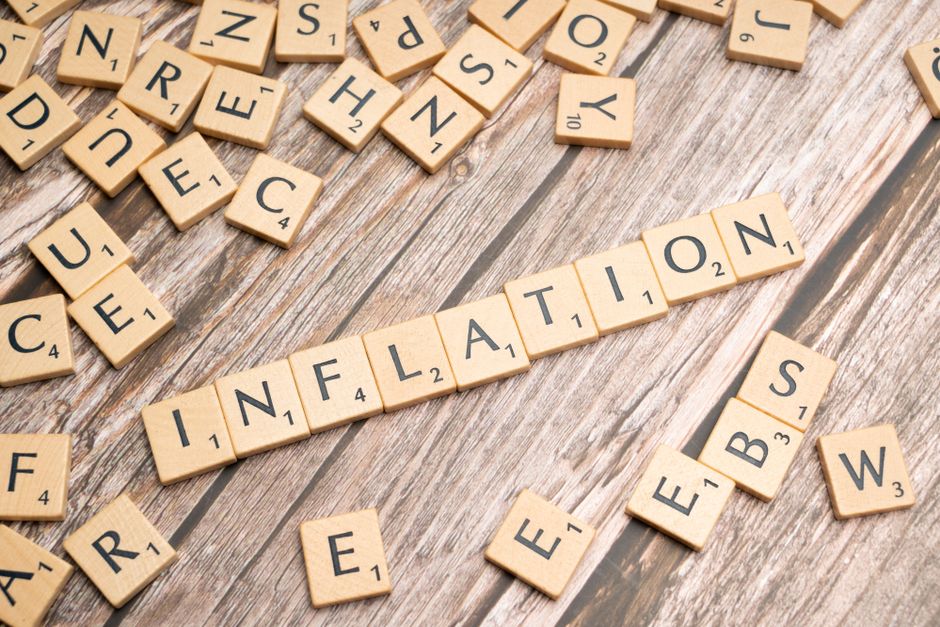
The May CPI report confirmed what anyone filling up their gas tank already knew: the Iran war has come home. At 4.2% annual inflation — the highest since April 2023 — we’re watching a geopolitical conflict translate directly into household budgets. Gasoline up 40.5%. Fuel oil up 58.9%. The Bureau of Labor Statistics notes that energy alone accounted for over 60% of the monthly CPI increase.
This is not a monetary phenomenon anymore. This is a supply shock with a specific cause: the Strait of Hormuz closure. And that distinction matters enormously for what comes next.
The Fed’s Impossible Position
Here’s what strikes me about the current situation: the Federal Reserve is being asked to fight a war-driven supply shock with demand-side tools. It’s like trying to put out a kitchen fire with a hairdryer.
Core inflation — stripping out energy and food — actually came in softer than expected at 0.2% month-over-month, below the 0.3% forecast. That’s the number that should matter for underlying price pressures. But headline inflation at 4.2% creates a political and psychological reality that the Fed cannot ignore. CME FedWatch shows 96% odds of rates holding steady at the June 17 meeting, but markets are now pricing in a potential rate hike before year-end.
New Fed Chair Kevin Warsh is three weeks into the job and already facing his first test. The textbook answer — look through temporary supply shocks — is much harder when “temporary” has no clear end date.
What the Numbers Actually Tell Us
Let me be precise about what’s happening:
Energy is the story. The 23.5% year-over-year surge in energy costs (up from 17.9% in April) is driving almost everything. Strip that out, and you have an economy running at roughly 2.9% core inflation — elevated, but not crisis territory.
Food is accelerating. The food index jumped to 3.1% from 2.3%, with some categories getting absurd — tomatoes up 32%, lettuce up nearly 25%. This isn’t about Iran; this is about domestic supply chains and weather. But it adds to the pain.
Shelter remains sticky. At 3.4%, housing inflation continues its stubborn persistence. This was the pre-war problem that never got solved.
Real wages are negative again. With 4.2% inflation against nominal wage growth below that, workers are losing purchasing power. The average American household is effectively taking a pay cut every month.
The Brookings Scenario Problem
Research from the Brookings Institution deserves attention here. Even in their optimistic scenario — a Hormuz closure lasting just one quarter with gradual resumption — they project headline inflation ending 2026 about 0.6 percentage points higher than baseline. That’s the best case.
The problem is that there’s no indication the Hormuz situation resolves in one quarter. The back-and-forth strikes continue. “We ended the war in Iran today,” President Trump said at a telerally, but Iranian foreign ministry spokesperson Esmaeil Baghaei said Iran had not reached a final decision on an agreement. This gap between declared victory and actual resolution is where inflation expectations live.
Second-Order Effects
What concerns me more than the headline number is the second-order transmission. When energy costs spike, they eventually pass through to everything else. Transportation services are already at 4.1% year-over-year. Airfares, shipping costs, and anything that moves is getting more expensive.
The question is whether we’re seeing the peak or the beginning of a sustained pass-through. Morningstar’s Preston Caldwell notes, “It’s not too late for high energy prices to spread into the rest of the index.” That’s the scenario where 4.2% becomes 5% or worse.
The May Peak Thesis
There’s a counterargument worth considering. Analysts at Oxford Economics point out that gas prices have fallen sharply so far in June. If that holds, May could represent the 2026 peak for headline CPI. The monthly trajectory would start bending down.
I’m skeptical of this view for one reason: it assumes the geopolitical situation stabilizes. Every time markets have priced in Iran de-escalation this year, they’ve been wrong. The two consecutive nights of U.S. strikes this week suggest negotiations remain fragile.
What This Means for Practitioners
If you’re building models that touch anything related to consumer behavior, cost projections, or macroeconomic assumptions, the obvious point is that your 2025 assumptions are broken. But less obviously:
Nominal vs. real matters again. For any financial model, the gap between nominal and real returns is now material. A 5% nominal return with 4.2% inflation is 0.8% real. Your clients’ portfolios may be growing on paper while shrinking in purchasing power.
Energy exposure is not optional. Any business without explicit energy cost modeling is flying blind. This applies to ML/AI infrastructure costs too — data centers consume enormous amounts of energy, and cloud provider pricing will eventually reflect that.
Scenario planning needs geopolitical inputs. The days of treating Middle East tensions as “someone else’s problem” are over. Energy price assumptions now require explicit geopolitical scenarios.
The Uncomfortable Truth
This inflation report tells us something uncomfortable: the U.S. economy’s stability is now hostage to events 7,000 miles away. The Fed can’t fix the Strait of Hormuz. Monetary policy can’t un-close a shipping lane. The tools don’t match the problem.
May’s 4.2% is not a failure of economic management. It’s the price tag for geopolitical conflict. Whether Americans are willing to pay it depends on questions far outside the CPI report.
FAQ
Q: Will the Fed raise interest rates in response to this inflation report?
A: Probably not immediately. The June 17 meeting is expected to hold rates steady with 96% probability according to CME FedWatch. However, if energy-driven inflation persists and begins passing through to core categories, a rate hike later in 2026 becomes increasingly likely. The Fed’s challenge is that rate hikes won’t directly address supply-driven inflation from the Hormuz closure — they can only dampen demand in response.
Q: How long will energy prices stay elevated?
A: This depends entirely on geopolitical developments rather than economic factors. The Strait of Hormuz closure that began in April 2026 continues to disrupt global oil supply. Even optimistic Brookings Institution scenarios project elevated energy costs through year-end. Watch negotiations between the U.S. and Iran for signals, but be aware that previous de-escalation expectations have repeatedly proven premature.
Q: Is core inflation actually under control despite the headline number?
A: The core CPI (excluding food and energy) rose just 0.2% month-over-month, below the 0.3% forecast, which is a somewhat encouraging sign. However, the 2.9% annual core rate remains above the Fed’s 2% target. The risk is that sustained high energy costs eventually pass through to core categories like transportation services (already at 4.1%) and shelter (3.4%). The distinction between “temporary supply shock” and “persistent inflation” depends on how long the energy disruption lasts.
Did you find this helpful?
Your support keeps this blog running and ad-free content coming.
☕ Buy me a coffeeMost Popular Posts
- Custom Metaclass in Python: 43% Faster Validation (12,973 views)
- yfinance Alternatives 2026: 7 Free APIs Compared (1,080 views)
- Python match-case: 7 Patterns That Beat if-elif Chains (994 views)
- YOLOv8 INT8 Quantization: 4x Faster on Jetson Orin (908 views)
- PaddleOCR vs EasyOCR vs Tesseract: Why PaddleOCR Is Slower (734 views)