- FIFA's first use of dynamic pricing at a World Cup has pushed final tickets to nearly $16,000, triggering investigations by New York and New Jersey attorneys general.
- The expansion to 48 teams democratizes participation with four nations making their debut, but premium pricing creates a contradiction where more countries compete while fewer fans can afford to attend.
- The 104-match tournament across 16 cities in three countries is projected to generate $9 billion in revenue but also 9-15 million tonnes of CO₂, roughly double previous tournaments.
The Biggest Tournament Starts With the Biggest Questions
As Shakira takes the stage at Estadio Azteca today for the opening ceremony of FIFA World Cup 2026, the narrative FIFA wants you to focus on is scale: 48 teams, 104 matches, three host nations, the most inclusive tournament ever. The narrative they’d rather you ignore: this World Cup has become a case study in how to systematically price out the very fans who made the sport a global phenomenon.
The numbers tell the story. Premium tickets for the July 19 final in New Jersey started at $6,730 and have climbed to $10,990—with some categories reaching nearly $16,000. For context, the most expensive Qatar 2022 final tickets were around $1,600. Dynamic pricing—the same algorithmic approach that makes concert tickets and airline seats increasingly unaffordable—has now arrived at football’s biggest stage. And FIFA isn’t apologizing. President Gianni Infantino’s defense? They’re simply “adapting to the North American market.”
That reasoning deserves scrutiny. Yes, American sports events command high prices. But the World Cup isn’t a Taylor Swift concert or an NFL playoff game. It’s positioned as the world’s sport, the great equalizer, the tournament where Bangladesh plays alongside Brazil. Pricing the stadium experience as a luxury good while simultaneously expanding participation to 48 nations creates a jarring contradiction that FIFA seems unwilling to address.
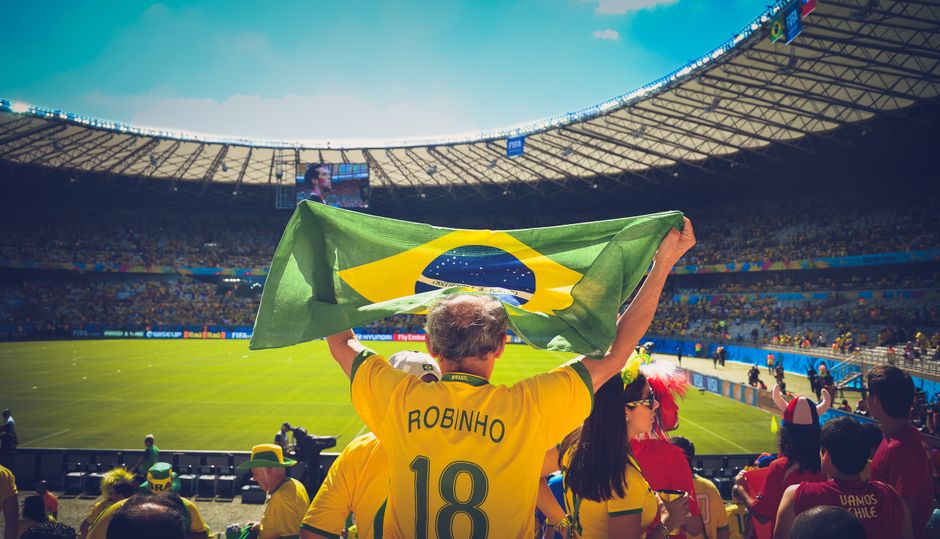
The Investigation That Matters
The attorneys general of New York and New Jersey have launched a joint investigation into FIFA’s ticketing practices. This is significant beyond the immediate legal exposure. It signals that U.S. regulators, who will host 60 of the 104 matches, are unwilling to treat FIFA’s commercial decisions as beyond scrutiny simply because it’s FIFA.
The investigation centers on dynamic pricing transparency—whether fans understood that prices could increase 35% on average during the sales process, whether the system was disclosed adequately, and whether it constitutes unfair or deceptive practices under state consumer protection law. Nearly 180,000 tickets have flooded the resale market before the tournament even begins, suggesting that speculation—not genuine fan demand—is driving at least part of the pricing.
Even President Trump told the New York Post he wouldn’t pay roughly $1,000 for nosebleed seats to the U.S. opening match against Paraguay. When the sitting U.S. President calls your ticket prices unreasonable for a tournament hosted in his country, you have a public relations problem that no opening ceremony can solve.
The Expansion Paradox
FIFA’s argument for expanding to 48 teams was democratization. Arsène Wenger, FIFA’s Chief of Global Football Development, framed it as a moral imperative: “We had to open it to the world… to more African countries, more Asian countries, because we want football to be strong everywhere.” This expansion brings Uzbekistan, Jordan, Cape Verde, and Curaçao to their first World Cup.
But democratization of participation alongside exclusion through pricing creates a tournament where more nations compete but fewer fans from those nations can attend. The projected $9 billion in revenue—driven partly by premium U.S. ticketing—funds the $871 million prize pool and FIFA’s operational expansion. The money has to come from somewhere. The question is whether the somewhere should be working-class fans who’ve supported these clubs for generations.
Miguel Maduro, former FIFA governance chief, put it directly: “You have a sport that is becoming increasingly an elite sport.” This isn’t nostalgia for some imagined past when football was pure. It’s an observation about trajectory. Each World Cup has become more expensive to attend than the last, and 2026 represents a step function, not incremental drift.

What Actually Matters Today
Mexico plays South Africa at Estadio Azteca in a rematch of the 2010 opening fixture. The stadium will make history as the only venue to host three World Cup openers. Shakira, J Balvin, Burna Boy, and Tyla will perform. 87,500 fans will pack the stands—those who could afford to be there.
The next 39 days will produce compelling football. The expanded format with 12 groups of 4, where the top two plus eight best third-place finishers advance, guarantees more competitive matches and higher stakes for smaller nations. The 104-match schedule across 16 cities will stress transportation infrastructure, particularly in transit-limited cities like Dallas and Houston.
Environmental concerns are substantial—the tournament could generate 9-15 million tonnes of CO₂ equivalent, roughly double the 2010-2022 average, driven by the three-country format requiring extensive air travel. Security preparations have absorbed $846 million in federal grants across nine host states, reflecting both the scale and the genuine risks of hosting the world’s largest single-sport event during a period of heightened geopolitical tension.
But the enduring legacy question is economic accessibility. If FIFA’s North American experiment succeeds commercially, dynamic pricing and premium stratification will become the template for future tournaments. The 2030 World Cup—spread across Morocco, Spain, and Portugal with additional matches in Argentina, Uruguay, and Paraguay to celebrate the centennial—will face pressure to match or exceed these revenue numbers.
FIFA has proven remarkably skilled at extracting value from the World Cup brand. Whether they can do so without permanently alienating the global fan base that created that value remains an open question. Today’s opening ceremony won’t answer it. The attorney general investigation might.
FAQ
Q: How does the new 48-team format work compared to previous World Cups?
A: The 2026 World Cup features 48 teams divided into 12 groups of 4, compared to the previous 32-team format with 8 groups. The top 2 teams from each group plus the 8 best third-place finishers advance to a round of 32, then single-elimination knockout rounds continue through the final. This increases total matches from 64 to 104 while maintaining the group-stage structure fans recognize.
Q: Why are tickets so much more expensive than previous World Cups?
A: FIFA introduced dynamic pricing for the first time at a World Cup, allowing ticket prices to fluctuate based on demand. Combined with premium pricing for the U.S. market, this has resulted in dramatic increases—final tickets reaching nearly $16,000 compared to roughly $1,600 in Qatar 2022. FIFA argues they’re adapting to North American market expectations, but the approach is now under investigation by New York and New Jersey attorneys general.
Q: Which teams are making their World Cup debut in 2026?
A: Uzbekistan, Jordan, Cape Verde, and Curaçao are all participating in their first FIFA World Cup. The expansion to 48 teams allowed more qualifying spots across all confederations, particularly benefiting Asian and African nations. This was FIFA’s stated goal for the expansion—making the tournament more globally representative.
Did you find this helpful?
Your support keeps this blog running and ad-free content coming.
☕ Buy me a coffeeMost Popular Posts
- Custom Metaclass in Python: 43% Faster Validation (12,957 views)
- yfinance Alternatives 2026: 7 Free APIs Compared (1,058 views)
- Python match-case: 7 Patterns That Beat if-elif Chains (983 views)
- YOLOv8 INT8 Quantization: 4x Faster on Jetson Orin (905 views)
- PaddleOCR vs EasyOCR vs Tesseract: Why PaddleOCR Is Slower (710 views)