- U.S. Navy fired Hellfire missiles at Panama-flagged M/V Vela Nova on Aug 11, the 12th vessel attacked since April blockade began
- Blockade has cost Iran $4.8B in oil revenue, but using anti-tank missiles on civilian ships sets dangerous precedent for global shipping norms
- Tactical success (disabled ship, no casualties) masks strategic failure: limited deterrent effect, risk of escalation, erosion of military-civilian distinction
The Vela Nova Incident Shows Economic Warfare’s Dangerous Escalation
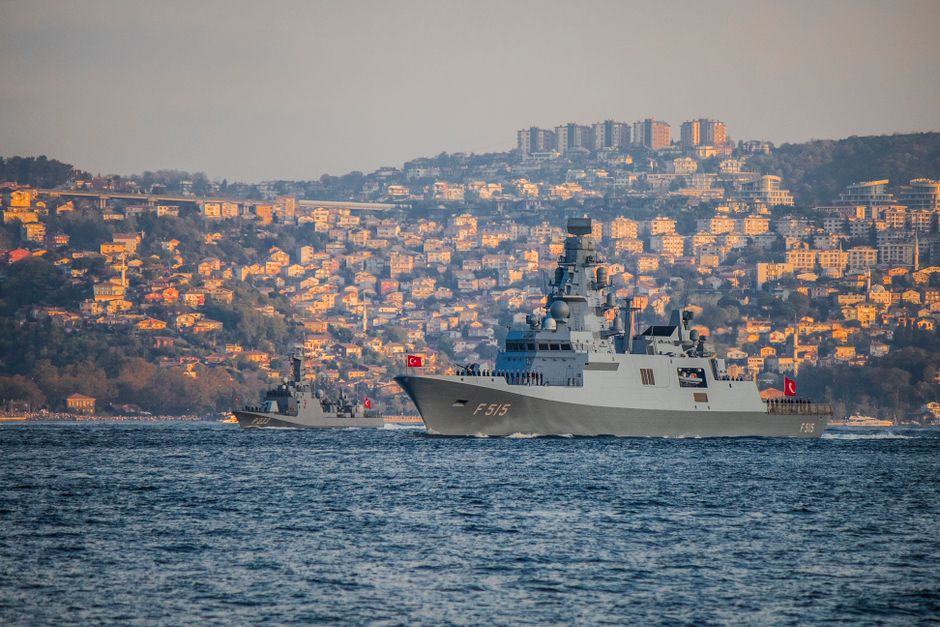
On August 11, a U.S. Navy MH-60 helicopter fired two Hellfire missiles into the engine room of the Panama-flagged cargo ship M/V Vela Nova in the Gulf of Oman. The ship was attempting to reach an Iranian port, violating the U.S. naval blockade reimposed in July after a failed ceasefire. All 17 crew members survived, but the strike marked the 12th vessel attacked since the blockade began in April — and the third since its reinstatement three weeks ago.
This isn’t a precision strike on a military target. It’s a deliberate attack on civilian shipping infrastructure to enforce economic strangulation. The Pentagon frames it as “targeted interdiction,” using Hellfires to disable propulsion without rupturing cargo tanks. But strip away the tactical jargon, and you’re left with a troubling precedent: the United States is now routinely firing anti-tank missiles at unarmed merchant vessels in international waters adjacent to the blockade zone.
The strategic logic is clear. Trump’s blockade has cost Iran an estimated $4.8 billion in oil revenue since April, slashing daily exports from $165.6 million in March to $120.6 million by late April. CENTCOM says it has redirected 55 commercial vessels, disabled three, and boarded two. The operational goal — cutting off Iran’s primary revenue stream to force diplomatic concessions — is working, at least on paper.
But the tactical success masks a deeper problem: this is economic warfare prosecuted through kinetic means against third-party civilian actors. The Vela Nova flies a Panamanian flag. Its crew are not combatants. The ship’s owners made a commercial calculation to run a blockade, likely for higher freight rates or contractual obligations. In response, the U.S. military launched missiles designed to penetrate armored vehicles into its engine room.
This crosses a line that most modern naval blockades have carefully avoided. Blockades are legal under international law if they meet specific criteria: effective enforcement, non-discriminatory application, and allowance for humanitarian aid. Firing on non-compliant vessels is permissible after warnings — but the norm has been disabling fire from deck guns, not precision-guided munitions designed for land combat. The use of Hellfires suggests either a lack of appropriate naval interdiction tools or a deliberate choice to send a more violent message.
The second-order implications are serious. Global shipping operates on the assumption that civilian vessels, even those engaged in sanctions-busting, face legal and financial consequences, not military strikes. Iran has already demonstrated its willingness to escalate: Houthi forces in Yemen killed six people in a separate Red Sea attack on the same day the Vela Nova was hit. If the U.S. normalizes missile strikes on blockade runners, what stops other powers from doing the same? China could cite this precedent in a Taiwan scenario. Russia could apply it in the Black Sea. The rules-based order depends on distinctions between military and civilian targets holding — and this erodes that line.
There’s also the operational risk. The Pentagon emphasizes that no crew were injured, but that’s luck, not design. A Hellfire missile carries a 20-pound warhead. Fires on cargo ships can spread rapidly. The next strike might not be so clean, and the first mass-casualty incident involving third-country nationals will trigger an international crisis that makes the current Iran standoff look manageable.
The Biden administration lifted this blockade in June after negotiating a memorandum of understanding, only for Trump to reimpose it five weeks later when talks collapsed. That on-again, off-again approach signals that this is a coercive tool, not a durable strategy. Blockades work when they’re sustained and predictable. Using them as a bargaining chip while simultaneously escalating enforcement tactics creates the worst of both worlds: maximum provocation with minimal credibility.
I think the Vela Nova strike reflects a broader failure to match means to ends. If the goal is to pressure Iran into a diplomatic settlement, economic sanctions and legal interdiction are effective, measurable, and defensible under international norms. If the goal is to demonstrate military dominance, there are far clearer ways to do that without putting civilian crews in the crosshairs. This middle path — kinetic strikes on commercial shipping — achieves tactical objectives while undermining the strategic framework that makes blockades legitimate.
The fact that this is the third such strike in three weeks, with no apparent change in Iranian behavior or blockade-running attempts, suggests the deterrent effect is limited. Shipping companies and flag states are calculating that the risk is worth the reward, or that the U.S. won’t sustain this level of enforcement. Either way, the current approach isn’t working as intended, and the cost of failure isn’t just strategic — it’s measured in the growing risk of miscalculation, escalation, and the normalization of attacking civilian ships as a standard tool of statecraft.
FAQ
Q: Is the U.S. legally allowed to fire on ships breaking a blockade?
A: Yes, under international law, a blockading force can use force against vessels attempting to breach after warnings. However, the norm has been disabling fire from naval guns, not anti-tank missiles. The legality is debatable if the blockade itself doesn’t meet strict criteria (effectiveness, non-discrimination, humanitarian exceptions), and firing on third-party civilian vessels raises significant legal and diplomatic risks.
Q: Why use Hellfire missiles instead of standard naval weapons?
A: The Pentagon claims Hellfires offer precision to disable propulsion without damaging cargo tanks or causing mass casualties. It’s either a tactical adaptation due to lack of lighter naval interdiction munitions on helicopters, or a deliberate choice to send a stronger deterrent message. Either way, it’s an unconventional application of a land-combat weapon to maritime enforcement.
Q: What happens if a crew is killed in one of these strikes?
A: A mass-casualty incident involving third-country nationals (like the Pakistani and Indonesian crew on other affected ships) would trigger an international crisis, potentially involving the flag state, ship owners’ countries, and maritime insurers. It would also set a dangerous precedent for other powers to justify similar strikes, undermining global shipping norms and the rules-based order that keeps civilian and military operations distinct.
Did you find this helpful?
Your support keeps this blog running and ad-free content coming.
☕ Buy me a coffeeMost Popular Posts
- Custom Metaclass in Python: 43% Faster Validation (12,833 views)
- Python match-case: 7 Patterns That Beat if-elif Chains (954 views)
- YOLOv8 INT8 Quantization: 4x Faster on Jetson Orin (783 views)
- yfinance Alternatives 2026: 7 Free APIs Compared (735 views)
- PaddleOCR vs EasyOCR vs Tesseract: Why PaddleOCR Is Slower (570 views)
Leave a Reply